
These documents are in Adobe® Portable Document Format (PDF) and require a copy of Adobe Reader® to view them. If you do not have a copy of Adobe Reader, you can download and install a free copy from Adobe.
November–December 2003
Early Diagnosis, Treatment of Glaucoma Can Limit Vision Loss 6 pages. [PDF 107K]
Even the slight loss of peripheral vision that often occurs in the early stages of glaucoma presents risks to pilots’ careers and to aviation safety. Eye care specialists have a variety of diagnostic tools to detect the disease, which often can be controlled with the regular use of eye drops.
September–October 2003
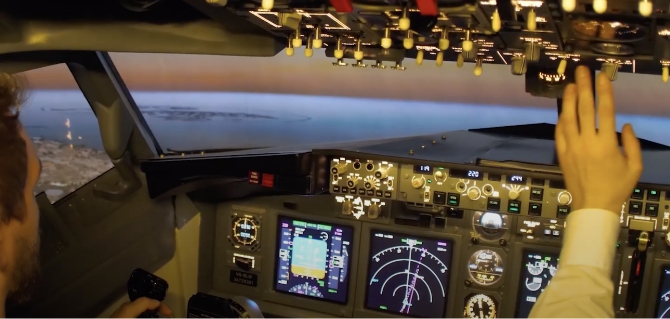
On the Flight Deck, Lighting Must Satisfy a Variety of Needs 12 pages. [PDF 145K]
Lighting color and intensity must be selected carefully to ensure that flight crewmembers are able to obtain information from instrument-panel displays and navigational charts and to perform other visual tasks that require uniform illumination and adequate contrast without glare.
July–August 2003
Hepatitis Can Disrupt Pilots’ Careers, Present Long-term Health Risks 8 pages [PDF 120K]
Hepatitis, an inflammation of the liver usually caused by one of several viruses, can be a serious illness. Although hepatitis sometimes occurs without symptoms, other forms of the
disease can be incapacitating, and chronic hepatitis can result in liver failure.
May–June 2003
Arrhythmias Present Pilots With Range of Risks 8 pages. [PDF 130K]
Some irregular heart rhythms are harmless, but others are associated with loss of consciousness or sudden death. Thorough medical evaluation often is required to determine the severity of a pilot’s arrhythmia and whether the ailmentmight affect the safety of flight operations.
March–April 2003
Awareness, Routine Medical Screening Can Minimize Breast Cancer Risks 8 pages. [PDF 172K]
Pilots who are diagnosed with breast cancer typically are prohibited from performing flight duties while undergoing chemotherapy or radiation therapy; otherwise, each case is assessed individually to determine when the pilot should be permitted to resume normal duties.
January–February 2003
Compliance With Safety Practices Is Best Method of Avoiding Eye Injuries 8 pages. [PDF 198K]
Loss of vision can be caused by exposure to chemicals and radiation, as well as trauma to the eye. Specialists say that with proper precautions, more than 90 percent of eye injuries could be prevented.