
Search Icon
< Home /Media /Archived Publications /Helicopter Safety 1994

Helicopter Safety 1994

Apr 19, 1994

These documents are in Adobe® Portable Document Format (PDF) and require a copy of Adobe Reader® to view them. If you do not have a copy of Adobe Reader, you can download and install a free copy from Adobe.

November–December 1994

Satellite-based Navigation Promises to Enhance Helicopter Utility in IFR Conditions 6 pages. [PDF 36K]

In only four years, global positioning system (GPS) has gone from the first satellite launch to the approval of several helicopter GPS approaches. GPS will make possible nonprecision approaches to virtually any heliport regardless of the availability of ground-based navigation aids.

Septembe–October 1994

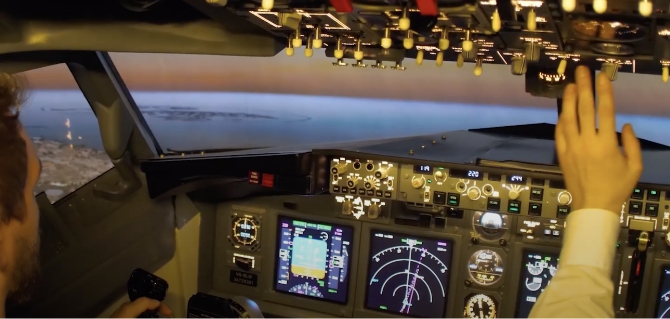
The Pilot’s Efforts Determine Simulator Training’s Value 4 pages. [PDF 28K]

Good preparation and an understanding of simulator training fundamentals can boost pilot performance and enhance the overall training.

July–August 1994

U.S. Hospital-based EMS Helicopter Accident Rate Declines Over the Most Recent Seven-year Period 8 pages. [PDF 43K]

Emergency medical service (EMS) helicopter accident rates have significantly improved. Nevertheless, the fatal accident rate for EMS helicopters remains high compared with other turbine-powered helicopters, and adverse weather remains the single greatest hazard.

May–June 1994

Judgment Remains Key in Avoiding Potentially Fatal Weather Encounters 4 pages. [PDF 34K]

Helicopter pilots operating under visual flight rules should carefully consider whether the flight can be conducted safely when weather briefers advise that “VFR flight is not recommended.”

March–April 1994

Improved Aeronautical Decision Making Can Reduce Accidents 6 pages. [PDF 44K]

Poor pilot decision making plays a leading role in causing aircraft accidents. But proper training can reduce pilot judgment errors significantly.

January–February 1994

Analysis of Sikorsky S-76 Helicopter Data Shows Comparatively Low Accident Rate 6 pages. [PDF 40K]

A survey of several independent accident data bases suggests that the aircraft’s twin-turbine design, rigorous training requirements and frequent two-pilot crewing have contributed to its overall safety record.

get full access to this article by joining today

FSF Membership includes full access to the AeroSafety World, a daily publication providing our members the latest news and information in aviation safety.

Join Today

Popular Categories

Explore Articles

Aviation Mechanics Bulletin 2005–2006

These documents are in Adobe® Portable Document Format (PDF) and require a copy of Adobe Reader® to view them. If...

Human Factors & Aviation Medicine 2005 – 2006

These documents are in Adobe® Portable Document Format (PDF) and require a copy of Adobe Reader® to view them. If...

Helicopter Safety 2004

These documents are in Adobe® Portable Document Format (PDF) and require a copy of Adobe Reader® to view them. If...

ICAO Secretary General to Deliver Keynote at FSF Networking and Awards Dinner

ALEXANDRIA, Virginia — International Civil Aviation Organization (ICAO) Secretary General Juan Carlos Salazar will deliver ...

Human Factors & Aviation Medicine 2005 – 2006

These documents are in Adobe® Portable Document Format (PDF) and require a copy of Adobe Reader® to view them. If you do no...

Foundation Recognizing EUROCONTROL and Embry-Riddle With Awards

The awards will be presented June 24 at the annual Networking and Awards Dinner in Washington....

Google Ads

Related posts

View Archives

Human Factors & Aviation Medicine 2005 – 2006

These documents are in Adobe® Portable Document Format (PDF) and require a copy of Adobe Reader® to view them. If you do no...

Aviation Mechanics Bulletin 2005–2006

These documents are in Adobe® Portable Document Format (PDF) and require a copy of Adobe Reader® to view them. If you do no...

Helicopter Safety 2005–2006

These documents are in Adobe® Portable Document Format (PDF) and require a copy of Adobe Reader® to view them. If you do no...

Cabin Crew Safety 2005–2006

These documents are in Adobe® Portable Document Format (PDF) and require a copy of Adobe Reader® to view them. If you do no...

Flight Safety Digest 2005–2006

These publications are in Acrobat® Portable Document Format (PDF) and require a copy of Adobe Reader®. If you do not have a...

Help Us Make The Skies Safer

“For nearly 80 years, the Foundation has been a leading force in aviation safety around the world. Our work is made possible by our members. Join today to help ensure that the Foundation remains the authoritative voice on all matters pertaining to aviation safety.”

– Hassan Shahidi | President and CEO