These documents are in Adobe® Portable Document Format (PDF) and require a copy of Adobe Reader® to view them. If you do not have a copy of Adobe Reader, you can download and install a free copy from Adobe.
December 1997
Safety and Statistics: What the Numbers Tell Us About Aviation Safety at the End of the 20th Century 28 pages. [PDF 303K]
Technological developments offer many avenues for further improving the safety record of an already generally safe aviation system, despite rapidly growing traffic. But human factors–based errors and substandard facilities in some areas of the world present challenges that are not easily overcome.
November 1997
Facilitating LOS Debriefings: A Training Manual 28 pages. [PDF 130K]
This issue of Flight Safety Digest is an adaptation of a manual published by the U.S. National Aeronautics and Space Administration (NASA) (Technical Memorandum 112192). Its suggestions are based on the authors’ study of line-oriented flight training (LOFT) at several U.S. airlines including data from a companion study, the authors’ subjective impressions, experiences related by LOFT instructors and technical literature about facilitation. Publication of this manual is in keeping with the Foundation’s charter to disseminate aviation safety information to the international aviation community, including many airline operators who otherwise would not receive this information.
October 1997
Report Says Lapses in Oversight of New Airlines Illustrate “Long Standing Problems” 32 pages. [PDF 395K]
The U.S. General Accounting Office (GAO) report found that during the study period the U.S Federal Aviation Administration (FAA) had no policy of increased surveillance for start-up airlines with above-average rates of accidents, incidents or enforcement actions. It also cited deficiencies in inspector training and FAA databases. But it acknowledged that recent FAA initiatives have the potential to bring about significant improvement.
June–September 1997
Special Safety Report: Protection Against Icing: A Comprehensive Overview 248 pages. [PDF 2,067K]
The laws of aerodynamics, which make flight possible, can be subverted in moments by a build-up of ice that in some situations is barely visible. During icing conditions, ground deicing and anti-icing procedures become an essential element in safe operations. Moreover, in-flight icing issues continue to be made more complex by a growing body of new knowledge, including refinements in our understanding of aerodynamics and weather.
May 1997
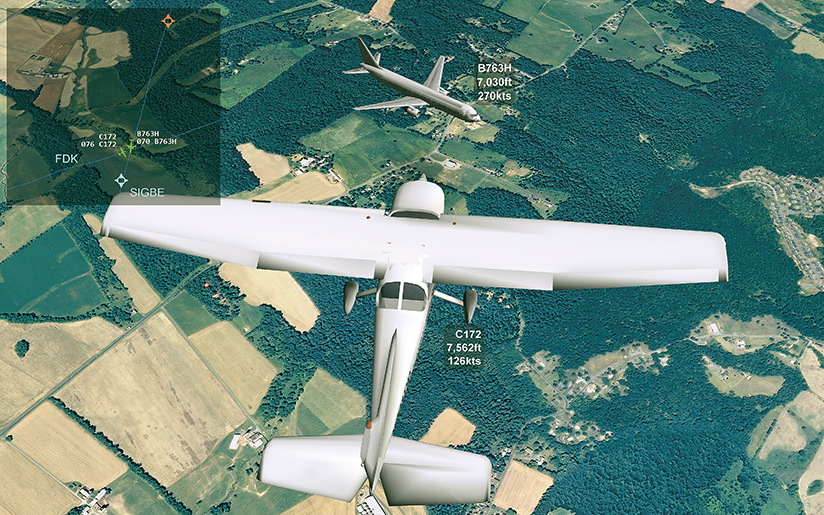
Collision Avoidance Must Go Beyond “See and Avoid” To “Search and Detect” 28 pages. [PDF 367K]
Eye function and eye-brain coordination are not naturally optimized for visual searches in airspace. But experimental evidence shows that pilots can train themselves in techniques for more effective visual detection of traffic.
March–April 1997
Special Double Issue: Reports by Airline Pilots on Airport Surface Operations: Part 2. 48 pages.
This double issue of Flight Safety Digest represents a follow-up to July–August 1995 Airport Operations. That bulletin summarized Part 1 of Reports by Airline Pilots on Airport Surface Operations, which outlined results from a survey of pilots from two major U.S. Airlines about the factors creating vulnerability to runway incursions and related surface incidents. This issue is no longer available.
February 1997
Special FSF Fatigue Countermeasures Task Force Report: Final Report: Principles and Guidelines for Duty and Rest Scheduling in Corporate and Business Aviation 19 pages. [PDF 195K]
This month’s issue of Flight Safety Digest presents revised fatigue management recommendations and guidelines, which were developed by the special Flight Safety Foundation (FSF) Fatigue Countermeasures Task Force for corporate and business operations. This final version is based on comments from the aviation community and more recent scientific research.
January 1997
Principles of Design and Display for Aviation Technical Messages 44 pages. [PDF 557K]
Effective document design requires an understanding of how readers perceive what is presented. Communication takes place not only through words but also through visuals, structure and typography. Optimizing all these elements will deliver the intended message clearly and meaningfully.