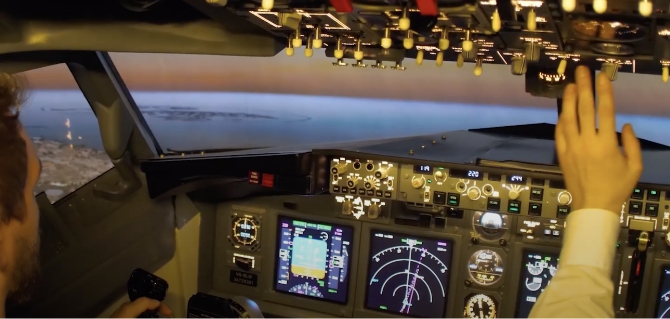
Inadequate fatigue risk management training and a longer-than-recommended nap during an overnight trans-Atlantic flight contributed to an altitude deviation as a sleepy airline pilot confused the bright light of Venus for an aircraft landing light and then misjudged the location of a military transport aircraft, investigators say.
The Transportation Safety Board of Canada (TSB) said in its final report that the incident occurred in the early morning of Jan. 14, 2011, when the Air Canada Boeing 767 was about halfway across the Atlantic Ocean on a flight from Toronto to Zurich, Switzerland.
The flight left Toronto/Lester B. Pearson International Airport at 2138 local time Jan. 13. At 0040, the first officer (FO), whose sleep the night before had been interrupted by child care responsibilities, said that he needed to rest. The captain agreed to a period of controlled rest (see “Controlled Rest”).