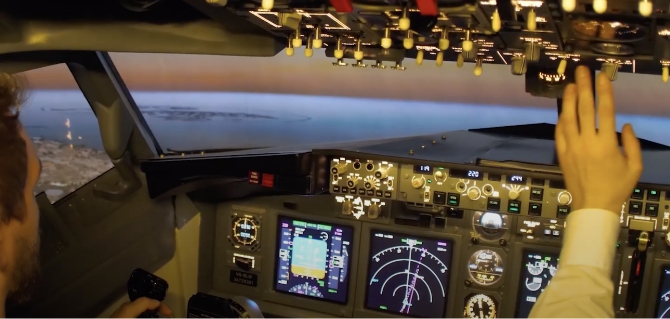

Airline pilots’ degree of fatigue during long-haul flights depends on several factors, including the quality of their sleep before awakening, the duration of the preceding period of wakefulness and the duration and intensity of their workload. Less well known is how best to incorporate knowledge about the individual pilot’s resistance to fatigue effects.
International experts have recognized the latter factor — and debated its significance — for at least six years (ASW, 6/11, p. 33). This article describes ongoing work on our theoretical model called the Adaptive Model of Operator Activity (AMOA) and a derivative practical application for airlines. The application is a computer-based, pilot fatigue assessment we call the Control of the Level of Efficiency Test (CLE Test). We repo…