
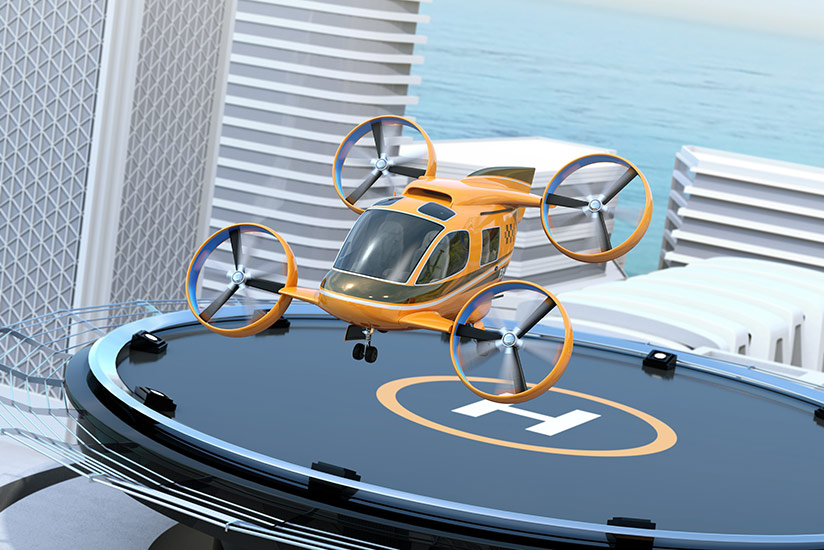
New forms of airborne technology, including highly automated electric and hybrid drones, will not only change the way cargo and people are moved but ultimately may also improve safety, according to a report by the U.S. National Academy of Sciences (NAS).
The report, Advancing Aerial Mobility ─ A National Blueprint,1 released in February, said that new developments in computer software, electronics and sensors, energy storage, electric aircraft and other fields are all contributing to advanced aerial mobility, which “involves the emergence of transformative and disruptive new airborne technology supporting an ecosystem designed to transport people and things to locations not traditionally served by current modes of air transportation.”
Hundreds of new “air vehicles” are being developed, some by traditional aerospace companies and others by newcomers with little or no experience in aviation, and many of the vehicles are “short-range, runway-independe…