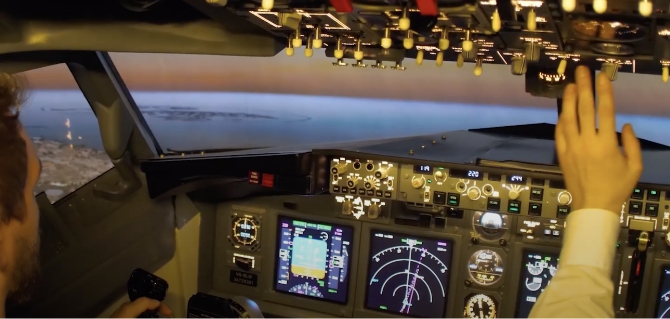

Spatial disorientation was the primary cause of the Sept. 13, 2008, crash of a Boeing 737-500 at Perm, Russia, according to the final report by the Russian Air Accident Investigation Commission (AAIC). Contributing factors were inadequate crew resource management (CRM), a lack of proficiency in basic aircraft handling and a lack of skills associated with the use of a “Western-type” attitude indicator for recovery from an upset.
During the approach to Perm’s Bolshoye Savino Airport, the flight crew was challenged by night instrument meteorological conditions, as well as by a navigation programming error and a “throttle stagger” that made manual engine management difficult and led to control problems caused by asymmetric thrust. The copilot, the pilot flying, abruptly handed over control to the captain when the aircraft was in a steep climbing left turn. The captain, whose spatial disorientation was exacerbated by alcohol and fatigue, was unable to recover. The aircraft rolled…