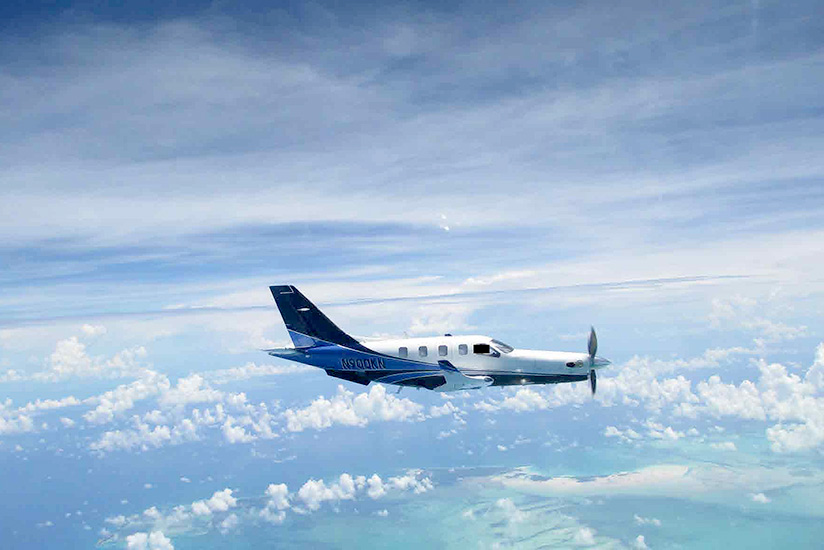
A cabin pressurization system that was prone to unnecessary shutdowns and an emergency checklist that placed system troubleshooting over ensuring continued consciousness were involved in the loss of two lives and a Daher-Socata TBM 900 the morning of Sept. 5, 2014, according to the U.S. National Transportation Safety Board (NTSB).
The TBM 900 was on a private flight from New York to Florida when its airflow ducts overheated and the environmental control system reacted by stopping the flow of pressurizing bleed air into the cabin. The pilot told air traffic control (ATC) that he needed to descend but declined to declare an emergency, which would have prompted priority handling. Controllers kept the airplane high while coordinating a progressive descent. Without the flow of bleed air, the TBM’s cabin depressurized within four minutes. Neither the pilot nor his passenger donned their oxygen masks; after they lost consciousness, the airplane continued flying on autopilot for several h…