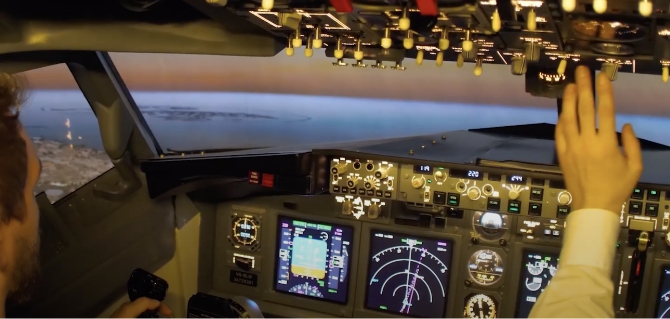
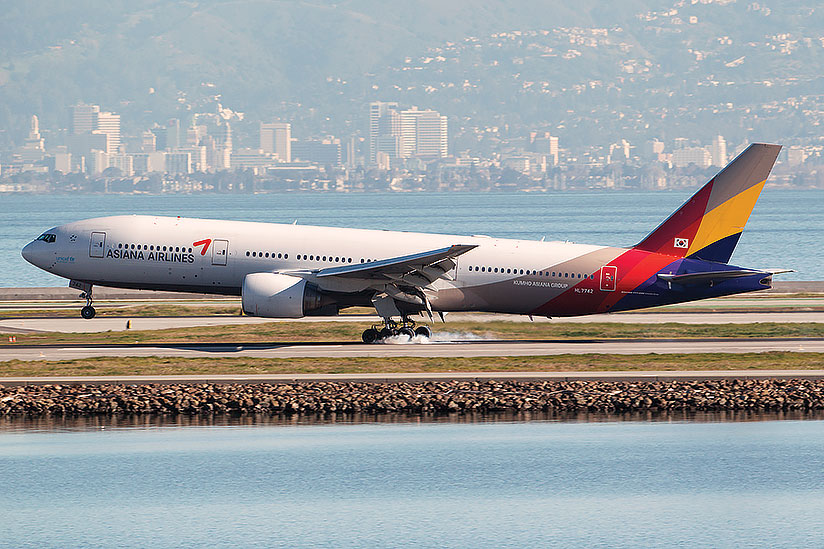
Better awareness of latent and subtle human-performance factors — as well as the human-machine interface and contextual issues minutes before Asiana Airlines Flight 214 struck a sea wall at San Francisco International Airport (SFO) — can benefit the world’s air transport safety professionals, say two of the U.S. accident investigators. This means not just knowing how things went wrong but also what alternative preparations and courses of action would have enabled an uneventful landing.
Behind-the-scenes logic and reasoning used by the U.S. National Transportation Safety Board (NTSB) during this investigation also may aid the work of others in averting repetition of this scenario by, for example, revealing unrecognized risks within existing practices, said the NTSB’s William Bramble, senior human performance investigator, and Roger Cox, a captain and senior air safety investigator. They were co-chairs of the investigation’s joint operations and human performance working group…