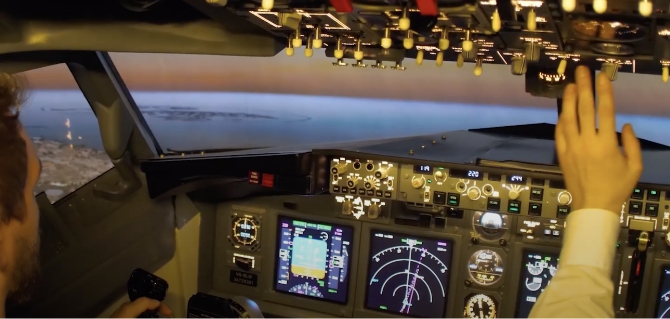

After several years of efforts to revise safety-related priorities in U.S. airline pilot training, the Federal Aviation Administration (FAA) and the industry have been cooperating to ensure the effectiveness of enhanced technological tools required by some of the additional content. Among these tools, the aviation community has clarified the necessary capabilities of flight simulation to be deployed — although some still are being refined.
National policy changes for this training began to take effect March 12, 2014, but some still are on the horizon, and must be implemented no later than March 12, 2019. Airlines and approved training organizations (ATOs) therefore have passed the one-year mark in what essentially is a five-year period of voluntary adoption. Although some requirements do not take effect in this period, associated regulations do provide airlines and ATOs details about expected technological capabilities — especially in full flight simulators (FFS) and other flight …