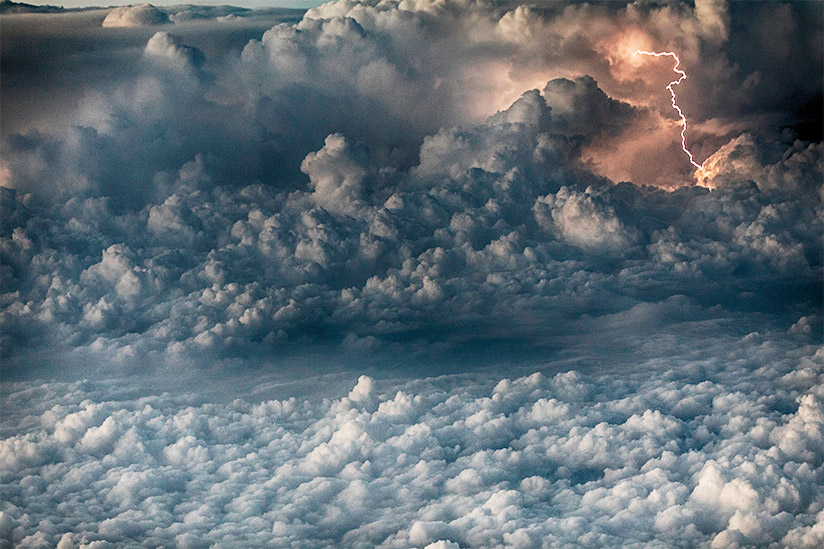
Convection remains a serious problem for the aviation community. Severe turbulence above the ground and strong winds with wind shear near the surface are among the hazards caused by convective activity, which plays a role in many aircraft accidents each year. Moreover, the massive hailstorm at Dallas–Fort Worth (Texas, U.S.) International Airport in April demonstrated how convection can seriously disrupt flight operations. Hundreds of flight delays and cancellations occurred, and damage to aircraft on the ground was extensive.
Meteorologists must know how convection operates in order to forecast it. They must make a model of the atmosphere, and even of the potential thunderstorm itself, to predict the weather that may be generated. The aviation industry would benefit from a better understanding of the workings of convection.
A simple key to understanding convection is to know that warm air rises and cold air sinks. More precisely, warm air is less dense and therefore buoyant (think…