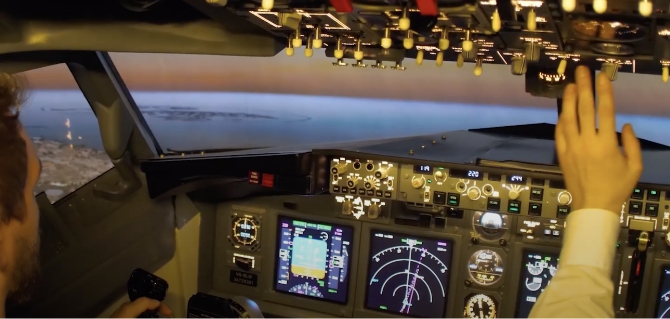
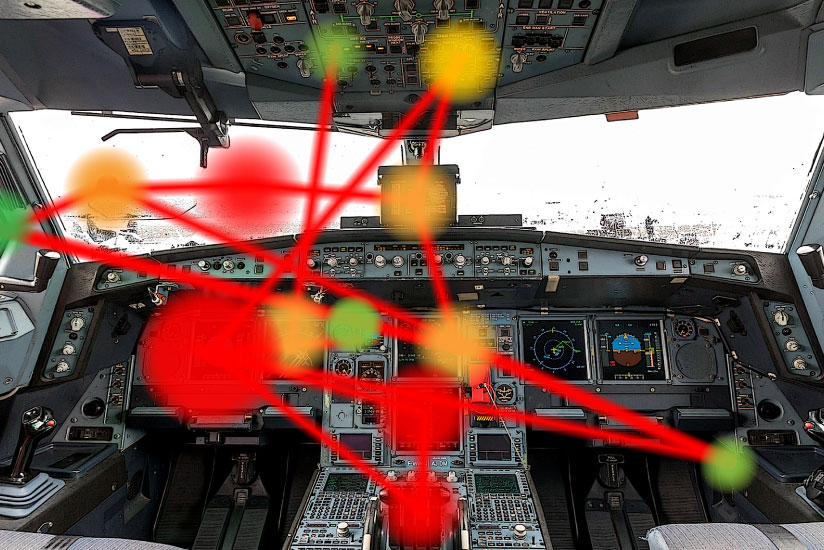
Eye-tracking technology, used along with simulator training, could identify problems with pilots’ instrument scans and help them correct their techniques for future flights, experts in aviation training and the use of eye tracking say.
For example, if a session with eye-tracking technology shows that the pilot monitoring is looking outside when he or she should be monitoring instruments, “you’ve identified a problem,” Capt. Mark Cameron of Emirates said during a presentation to Flight Safety Foundation’s International Air Safety Summit, held in November in Seattle.
Co-presenter Patrick Nolan, general manager for aviation with eye-tracking equipment manufacturer Seeing Machines, added that the goal is not only to determine what a pilot is looking at but also to put that information into context.
For example, Nolan said, eye-tracking equipment can help determine whether a pilot is checking the airspeed before calling for flap extension. An instructor who is armed with …