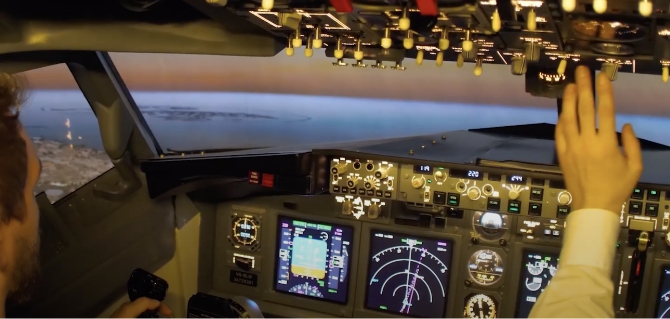
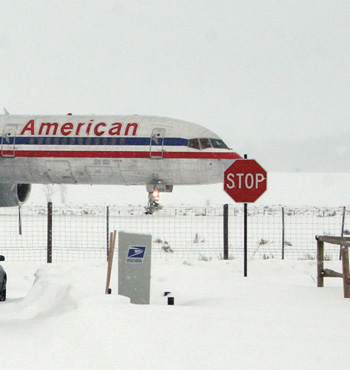
The pilots were distracted and confused by the failure of the thrust reversers to deploy on command and did not notice that the speed brakes had not extended automatically on touchdown. Lacking adequate deceleration, the airplane — a Boeing 757-200 — ran off the end of the wet runway and became mired in deep snow.
There were no injuries and only minor damage to the airplane during the Dec. 29, 2010, incident, which occurred at Jackson Hole (Wyoming, U.S.) Airport. In its final report, the U.S. National Transportation Safety Board (NTSB) said that the investigation revealed that a manufacturing defect in a clutch mechanism had prevented the speed brakes from extending and that the thrust reversers momentarily had become locked in transit when the weight-on-wheels “ground” signal was interrupted on touchdown.
The clutch defect and the captain’s “failure to monitor and extend the speed brakes manually” were cited as the probable causes of the incident. Contributing fac…