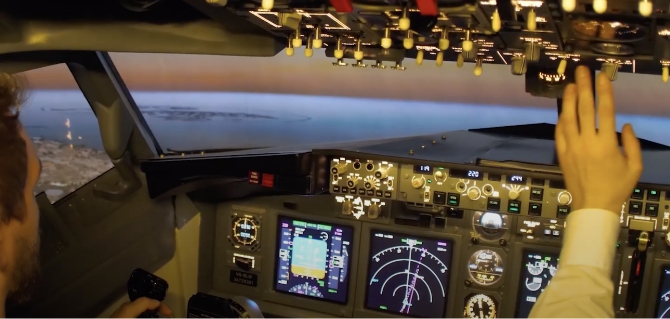

In 1995, American Airlines Flight 965, a Boeing 757, struck a mountain near Buga, Colombia. A last-minute change in the arrival caused a rushed descent. The captain entered “R” for “Rozo” (a nondirectional beacon [NDB] radio navigation aid) into the flight management system (FMS). However, the Rozo NDB could be accessed only by entering its full name; entering only “R” accessed the Romeo NDB in Bogotά, 132 nm (244 km) away. The input was not verified by the first officer (FO), and neither pilot verified the effect on the flight path, which resulted in a loss of situation awareness. Once the pilots recognized the error, a recovery was initiated, but it was too late. The aircraft struck El Diluvio Mountain at approximately 8,900 ft above mean sea level. There were 159 fatalities; four passengers survived.
Erroneous (or incomplete) data frequently are entered into the FMS, and frequently this results in a vertical, lateral or speed deviation. This articles focuses o…