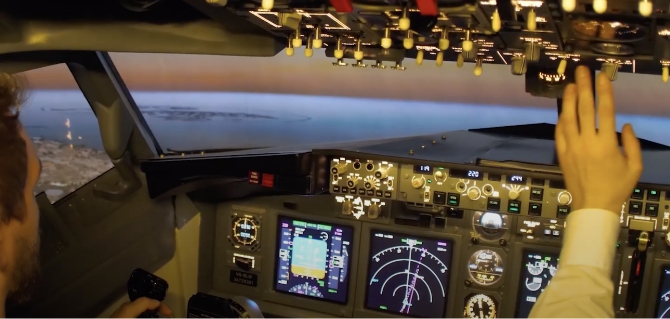
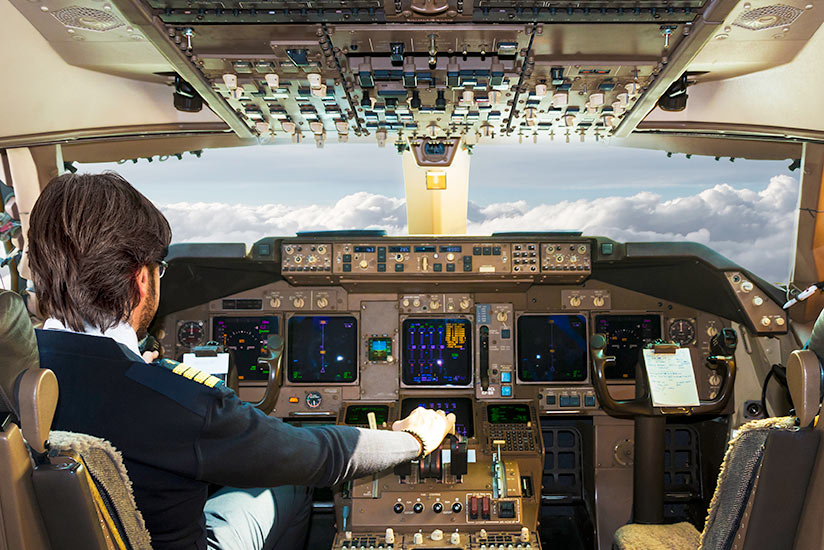
Despite technological advances and increased automation, the role of human pilots in the cockpit remains critical, especially in situations that are out of the ordinary, according to research by the U.S. National Aeronautics and Space Administration (NASA).1
A research report, published in September 2017 to coincide with presentation at a meeting of the American Institute of Aeronautics and Astronautics, said that data generated in a study of several crew configurations support “the criticality of the human’s role and the adaptability of human pilots/flight crew that is instrumental in overcoming non-normal conditions and in completing safe recoveries, even in SPO [single-pilot operations].”
The number of required flight crewmembers is determined by an aircraft’s design and governed by operating regulations, but “vast improvements in computational power and machine learning” have prompted research into the possibility of reducing the required number of crew…