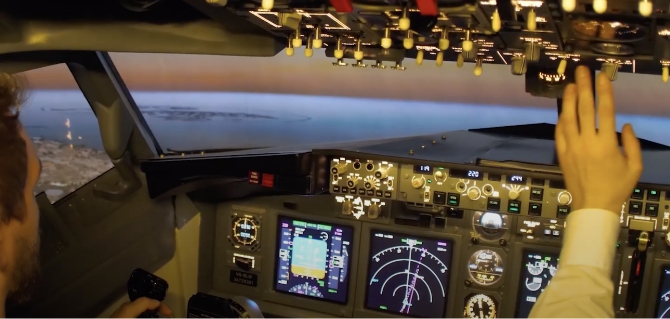
The flight crew was in for a surprise. They had established their large air carrier aircraft on the localizer during a coupled instrument landing system (ILS) approach to Chicago O’Hare International Airport’s Runway 28 and were awaiting glideslope interception when their glideslope course deviation indicators (CDIs) abruptly moved from the full-up position to full-down. The airplane pitched nose-down and descended 100 ft before the pilot flying disengaged the autopilot and hand flew the airplane back to the appropriate altitude. “While leveling, I saw the glideslope indicator go back to the correct indication of full-up,” the pilot said.1
The anomaly likely was caused by disruption of the glideslope signal by a large cargo aircraft holding for takeoff on Runway 28. Tower personnel told the crew that, because of the weather conditions — 2 1/2 mi (4,000 m) visibility in snow and a 1,500-ft overcast ceiling — they were not re…