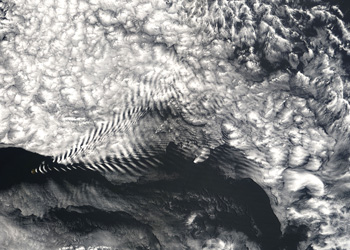
On March 5, 1966, British Overseas Airways Corp. (BOAC) Flight 911, a Boeing 707, departed from Tokyo’s Haneda Airport for Hong Kong Kai Tak International Airport. In clear skies, the flight crew attempted to fly over Mount Fuji (approximate elevation 12,400 ft). But with strong winds and an approach to the mountain from the leeside, the airplane encountered a particularly severe mountain wave over Gotemba City at 16,000 ft. The turbulence encounter was so extreme that the aircraft experienced in-flight structural breakup. All 124 people aboard were killed.
Even though today’s jetliners benefit from newer designs to withstand turbulence, pilots still are expected to avoid conditions where severe or extreme turbulence is possible. And although crashes primarily caused by turbulence have become rarer since the Flight 911 accident, they still occur, and serious incidents are common. The U.S. National Transportation Safety Board (NTSB) estimates that nearly three-quarters of all wea…