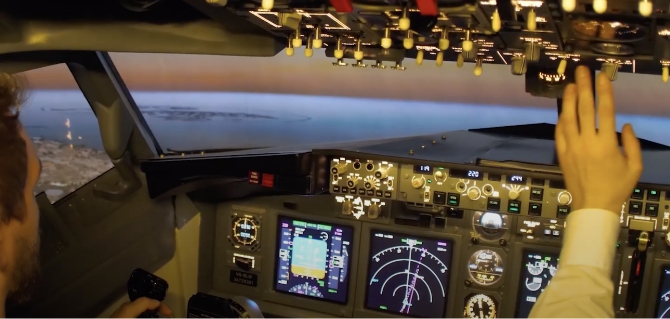

The pilots of a Boeing 737-800 did not heed indications of a significant decrease in airspeed until the stick shaker activated on final approach to Runway 18R at Amsterdam (Netherlands) Schiphol Airport. Their reactions to the stall warning were uncoordinated and incorrect, and maximum thrust was applied too late to prevent the aircraft from stalling at an altitude from which recovery was not possible.
Five passengers, a flight attendant and the three pilots were killed, and 117 passengers and three flight attendants were injured when the aircraft struck terrain 0.8 nm (1.5 km) from the runway. Six passengers escaped injury.
The final report by the Dutch Safety Board (DSB) concluded that the Feb. 25, 2009, accident “was the result of a convergence of circumstances,” including air traffic control (ATC) handling that brought the aircraft in high and close to the runway for an instrument landing system (ILS) approach, a radio altimeter malfunction that caused the autothrottle system…