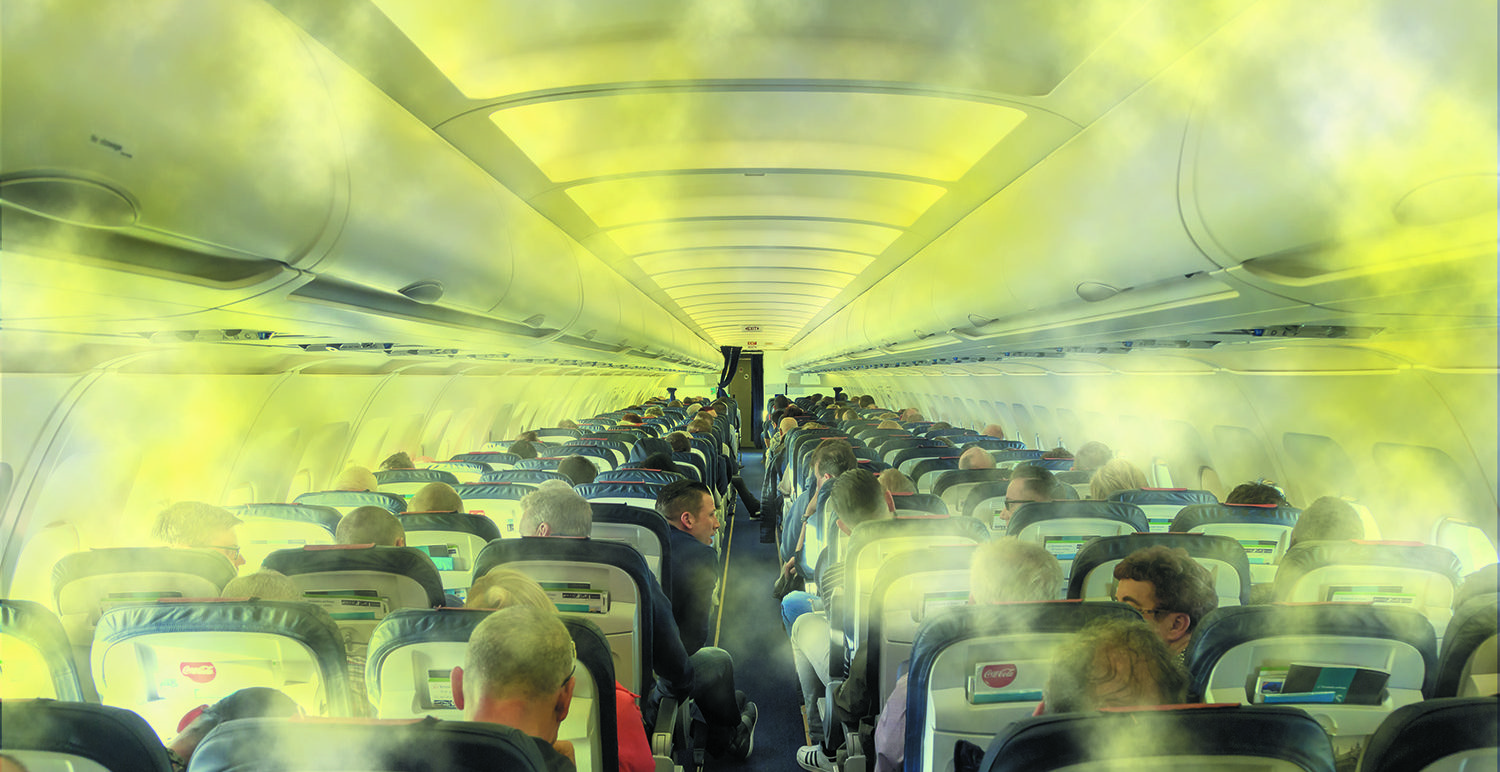
Despite years of research, aeromedical specialists lack the information they need to quantify the potential health risks of exposure to bleed-air contaminants in airplane cabin air, a report for the U.S. Federal Aviation Administration (FAA) Civil Aerospace Medical Institute (CAMI) says.1
The report, which focused on exposure to bleed-air contaminants generated during “fume events” in pressurized aircraft, obtained information from existing literature that dealt primarily with the presence of carbon monoxide, carbon dioxide, ozone, volatile and semi-volatile organic compounds and airborne particles. The author determined that the information was insufficient to enable him to form any conclusions.
“Quantification of the potential health risks associated with exposure to bleed-air contaminants in cabin air is not possible without broad identification and measurement of the representative hazardous constituents of bleed air during contaminated air events,” the rep…