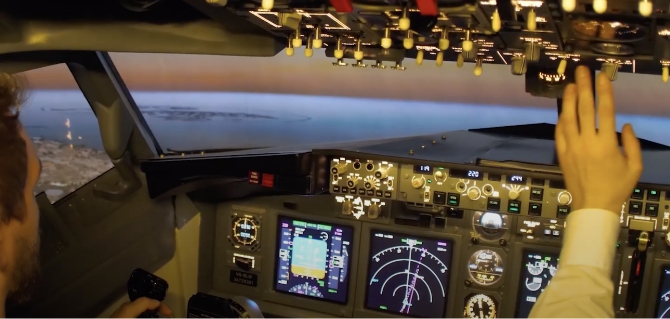
A number of human factors issues — many of them related to incorrectly setting a cockpit instrument or mis-hearing an air traffic control (ATC) transmission — are likely to accompany the widespread use of automatic dependent surveillance–broadcast (ADS-B) equipment, according to a 2018 study.1
A report on the study, conducted by Rajee Olaganathan, an adjunct assistant professor at Embry-Riddle Aeronautical University–Worldwide and published in the April 2018 issue of the International Journal of Aerospace and Mechanical Engineering, examined the hazards likely to be associated with ADS-B, focusing on those related to pilot error, ATC error and communications error.
The ADS-B system is being installed worldwide. In the United States, beginning Jan. 1, 2020, aircraft must be equipped with ADS-B Out2 equipment to be permitted to fly in most controlled airspace.
Overall, ADS-B is a key component of the U.S. Federal Aviation Administration’s…