Search Icon
< Home /Accident/Incident Investigation /Fatigue Crack Led to Propeller Separation

Fatigue Crack Led to Propeller Separation

Oct 10, 2018
No one injured in March 2017 airliner incident.

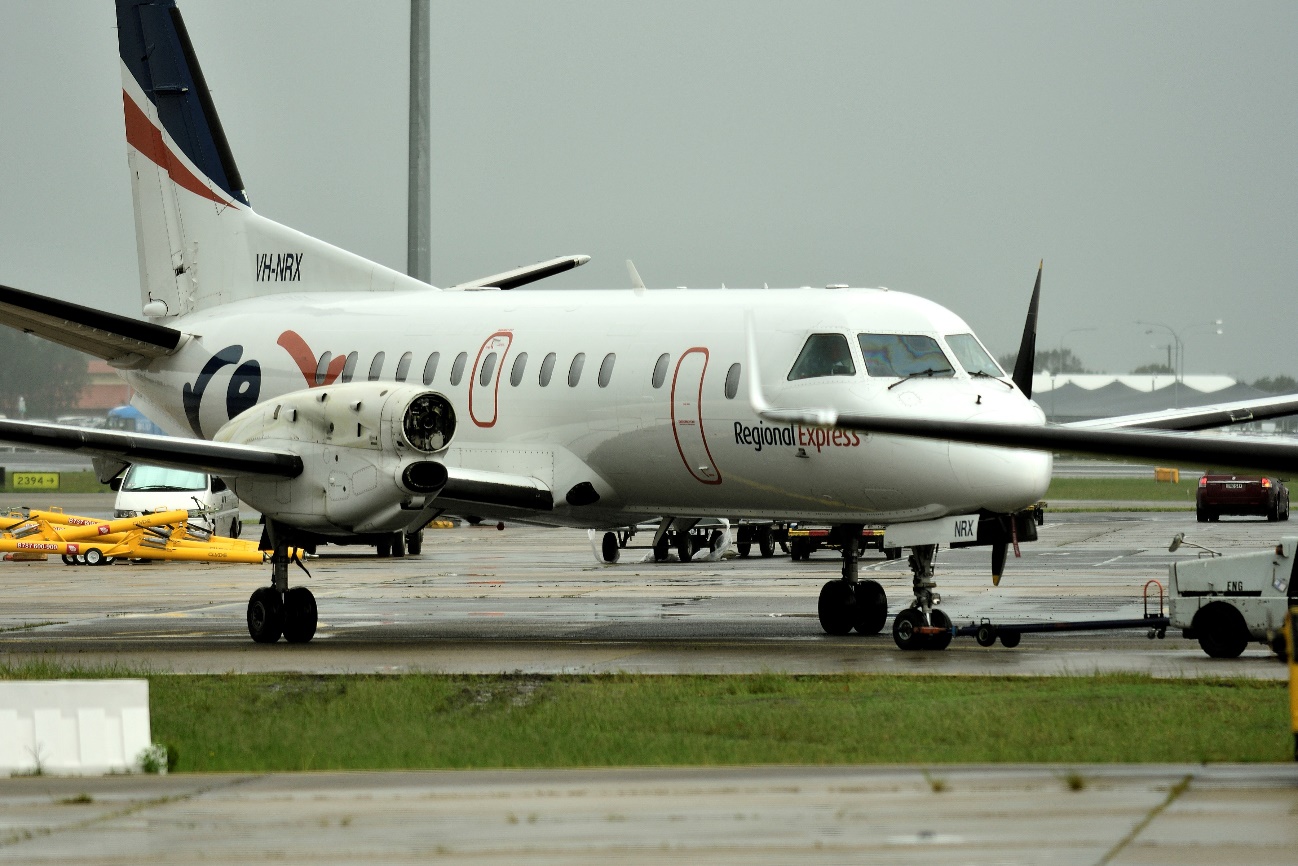
An undetected fatigue crack led to a Saab 340 turboprop losing a propeller during a scheduled passenger flight in March 2017, the Australian Transport Safety Bureau (ATSB) said in its final investigative report on the incident. The airplane landed safely at Sydney Airport after the propeller separation and none of the 16 passengers and three crew aboard the Regional Express (REX) flight from Albury to Sydney was injured.

According to the ATSB report, the airplane was about 102 km (55 nm) southwest of Sydney Airport on March 17, 2017, when the flight crew noticed a slight fluctuation on the right engine torque gauge. When the captain was unable to stop the fluctuations by manipulating the power levers and condition lever, the crew began the uncommanded engine procedure checklist. As the crew proceeded through the checklist items, they began to feel minor vibr…

* You must be an FSF Member to have full access to this article.

get full access to this article by joining today

FSF Membership includes full access to the AeroSafety World, a daily publication providing our members the latest news and information in aviation safety.

Join Today

Popular Categories

Explore Articles

NTSB Plans Hearing on Southwest Engine Failure

The U.S. National Transportation Safety Board (NTSB) plans a public hearing in November on the uncontained engine failure that killed...

NTSB Examines Atlas Air Jet’s Data Recorders

The U.S. National Transportation Safety Board (NTSB) has conducted an initial review of the cockpit voice recorder (CVR) on Atlas...

FAA to Order Inspections of CFM56-7B Engines

The U.S. Federal Aviation Administration (FAA) said late Wednesday that it will issue an airworthiness directive (AD) within the next...

ICAO Secretary General to Deliver Keynote at FSF Networking and Awards Dinner

ALEXANDRIA, Virginia — International Civil Aviation Organization (ICAO) Secretary General Juan Carlos Salazar will deliver ...

Human Factors & Aviation Medicine 2005 – 2006

These documents are in Adobe® Portable Document Format (PDF) and require a copy of Adobe Reader® to view them. If you do no...

Foundation Recognizing EUROCONTROL and Embry-Riddle With Awards

The awards will be presented June 24 at the annual Networking and Awards Dinner in Washington....

Google Ads

Related posts

View Archives

Former NTSB Vice Chair Robert T. Francis Dies

Robert T. (Bob) Francis, a former vice chair of the U.S. National Transportation Safety Board (NTSB) and long-time member of ...
damaged rotor blades

Blade Fatigue Crack Cited in 2018 Fatal Depressurization

A fatigue crack in a fan blade in the engine of a Southwest Airlines Boeing 737-700 was to blame for the chain of events that...

Coffee Spill Leads to Smoke, Then a Diversion

A spilled cup of coffee on the flight deck of an Airbus A330 knocked out the flight crew’s audio control panels (ACPs) and ...

ATSB Seeks Better Design Tolerance to Dual Control Inputs

The European Union Aviation Safety Agency (EASA) and aircraft manufacturer ATR should act to improve aircraft system design t...

Ethiopia Releases Preliminary Accident Report in Flight 302 Crash

Ethiopia’s Aircraft Accident Investigation Bureau today released a preliminary accident investigation report into the March...

Help Us Make The Skies Safer

“For nearly 80 years, the Foundation has been a leading force in aviation safety around the world. Our work is made possible by our members. Join today to help ensure that the Foundation remains the authoritative voice on all matters pertaining to aviation safety.”

– Hassan Shahidi | President and CEO