These documents are in Adobe® Portable Document Format (PDF) and require a copy of Adobe Reader® to view them. If you do not have a copy of Adobe Reader, you can download and install a free copy from Adobe.
December 1993
Worldwide Aeronautical Research and Development Face Competitive Challenges 39 pages. [PDF 274K]
Advances in technology and global competitiveness are changing the research and development landscape of the aerospace industry, and are offering potential new safety benefits.
November 1993
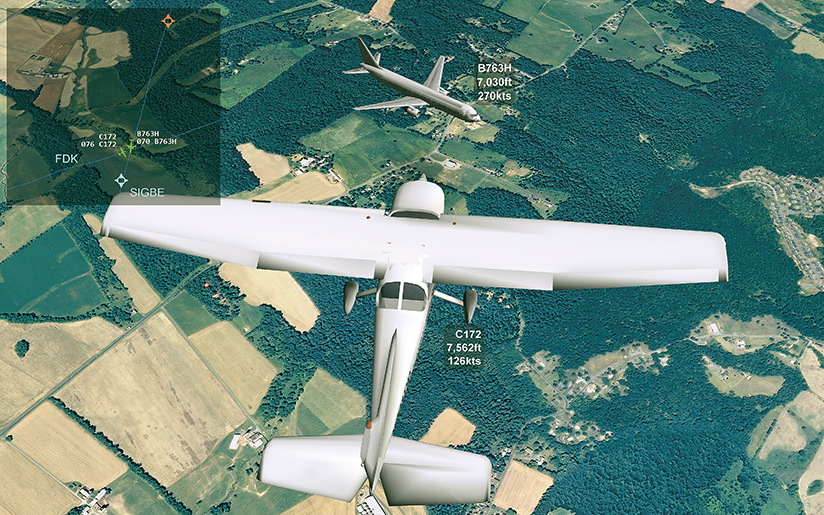
The U.S. Air Traffic Control System Wrestles with the Influence of ACAS 28 pages. [PDF 419K]
Although TCAS II has been credited with averting inflight aircraft collisions, its implementation continues to cause disagreements between pilots and controllers.
October 1993
Survivors of U.S. Airline Accidents Shed Light on Post-accident Trauma 32 pages. [PDF 331K]
Many survivors felt that their tragedies were prolonged because the airlines were not in control of the post-accident situations for hours.
September 1993
U.S. Air Carrier Accident Rate Lowered Significantly in 1989; Recently Released Report Compares Data to 1980–1988 Period 76 pages. [PDF 266K]
The data for calendar year 1989, which was published by the U.S. National Transportation Safety Board, is the NTSB’s most recent annual review of data for aviation accidents involving revenue operations of U.S. air carriers. The data show a 17 percent reduction in the accident rate when compared to the previous nine years.
August 1993
Special Supplement: Toward a Safer Future — Excellence in Aviation. Proceedings of the 5th annual European Corporate and Regional Aircraft Operators Safety Seminar (ECARAOSS). 168 pages.
The 5th annual ECARAOSS featured 20 presentations on safety issues of interest to the worldwide aviation safety community. They are presented here as a special supplement to the FSF Flight
Safety Digest. This issue is no longer available.
July 1993
Autogenic Feedback Training Improves Pilot Performance During Emergency Flying Conditions 24 pages. [PDF 187K]
Emergencies in flight create stress factors that can seriously degrade pilot performance. A recent study examines how autogenic feedback training improves pilot performance during high-stress and emergency situations.
June 1993
Research Identifies Common Errors Behind Altitude Deviations 24 pages. [PDF 352K]
Nearly 500 pilots and 48 air traffic controllers provided data in a recent study designed to analyze an alarming increase in altitude deviations.
May 1993
Volcanic Hazards and Aviation Safety: Lessons of the Past Decade 21 pages. [PDF 193K]
Avoiding the ash-laden cloud from a volcano is the only way to guarantee that an aircraft is not damaged by the cloud’s dangerous particles, which can destroy an aircraft engine and threaten flight safety. Nature remains the ultimate force.
April 1993
Study Urges Application of Flight Operational Quality Assurance Methods in U.S. Air Carrier Operations 25 pages. [PDF 219K]
The Flight Safety Foundation has completed a pivotal study on the requirements, costs and implementation issues involved in setting up flight operational quality assurance programs at U.S. airlines. More than 25 non-U.S. Airlines that have adopted such programs were contacted.
March 1993
During Adverse Conditions, Decelerating to Stop Demands More from Crew and Aircraft 25 pages. [PDF 164K]
Hydroplaning, gusting cross winds and mechanical failures are only a few of the factors that contribute to runway overrun accidents and incidents after landing or rejecting a takeoff. Improvements in tire design, runway construction and aircraft systems reduce risks, but crew training remains the most important tool to stop safely.
February 1993
U.S. Report: Delays Still Plague Efforts to Harmonize Commercial Transport Airplane Standards 20 pages. [PDF 134K]
Despite 10 years of joint efforts to harmonize certification standards, the United States and European aviation authorities still have much to accomplish. A U.S. study says that a new joint strategy may speed the process.
January 1993
Rejected Takeoffs: Causes, Problems and Consequences 25 pages. [PDF 180K]
Rejected takeoffs involve multiple risks and require a high level of pilot perception, judgment and procedural skill. This study looks at human factors associated with rejected takeoffs.