These documents are in Adobe® Portable Document Format (PDF) and require a copy of Adobe Reader® to view them. If you do not have a copy of Adobe Reader, you can download and install a free copy from Adobe.
November–December 1999
Human Factors Report: Propulsion System Malfunction Plus Inappropriate Crew Response (PSM+ICR) 207 pages. [PDF 816K]
The task report presented herewith was undertaken by Aerospace Industries Association (AIA) and The European Association of Aerospace Industries (AECMA) at the request of the U.S. Federal Aviation Administration (FAA) in response to a U.S. National Transportation Safety Board (NTSB) recommendation arising from the 13 December 1994 turboprop-airplane accident at Raleigh-Durham, North Carolina, U.S., which resulted in fatal injuries to 13 passengers and two crewmembers. The NTSB findings in this event strongly suggested that a warning light intended to indicate the activation of a recovery function was falsely interpreted as an engine failure and led to inappropriate crew action. The FAA recognized that there were additional data suggesting that this accident was one of a number of similar accidents, and that a study would be appropriate to look into all commercial transport accident histories where an inappropriate crew action may have been taken in response to what should have been a benign propulsion system malfunction.
September–October 1999
Special Double Issue: Continuing Airworthiness Risk Evaluation (CARE): An Exploratory Study 64 pages. [PDF 373K]
Methods for evaluation and management of continuing airworthiness are evolving. Advances depend on accurate, dependable databases compiled by government and private organizations. Such databases include events that, when aggregated, provide a data-driven means for evaluating the airworthiness of airplane models, operator fleets, individual airplanes or airplane systems. Combining various databases promises even more precise airworthiness monitoring, but considerable progress in standardization must occur before that promise can be realized.
June–August 1999
Glass Cockpits: Pilots’ Perspectives: Transition to Glass: Pilot Training for High-technology Transport Aircraft/Advanced-technology Aircraft Safety Survey Report 236 pages. [PDF 1,005K]
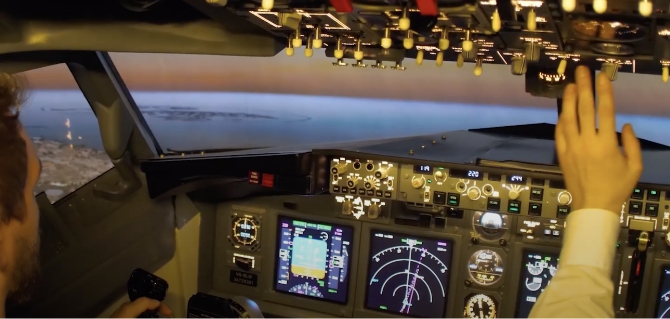
This special issue presents two reports on the experiences of pilots who fly aircraft with “glass cockpits” — that is, modern aircraft with highly automated flight management systems and electronic flight instrument systems. The reports sample the views of line pilots regarding the advantages and disadvantages of flying these advanced-technology aircraft.
May 1999
FSF Icarus Committee Report: Aviation Grapples with Human-factors Accidents 32 pages. [PDF 280K]
This issue presents reports by the Flight Safety Foundation’s Icarus Committee. The committee began work in 1992, when the Foundation gathered together a small group of specialists from throughout the aviation industry to study human factors issues in aviation safety.
April 1999
Crew Error Cited as Major Cause of U.S. Aerial Fire Fighting Accidents 32 pages. [PDF 230K]
Errors in judgment and deficiencies in crew resource management and compliance with standard operating procedures were common causes of U.S. aerial fire fighting accidents involving fixed-wing aircraft in 1976–1998.
March 1999
Enhancing Flight-crew Monitoring Skills Can Increase Flight Safety 24 pages. [PDF 270K]
Safety problems can arise from insufficient monitoring by the flight crew. Monitoring can be degraded because of several factors, including preoccupation with other duties. Nevertheless, monitoring can be improved through policy changes and crewmember training.
November 1998–February 1999
Special FSF Report: Killers in Aviation: FSF Task Force Presents Facts about Approach-and-landing and Controlled-flight-into-terrain Accidents 288 pages. [PDF 1,551K]
This special report includes the most recent versions of working-group reports from the FSF Approach-and-landing Accident Reduction (ALAR) Task Force, as well as previously published reports that also include data aboutcontrolled-flight-into-terrain (CFIT) accidents. These combined reports present a unique and comprehensive review of ALAs and CFIT.