
Search Icon
< Home /Media /Archived Publications /Human Factors & Aviation Medicine 1996

Human Factors & Aviation Medicine 1996

Apr 22, 1996

These documents are in Adobe® Portable Document Format (PDF) and require a copy of Adobe Reader® to view them. If you do not have a copy of Adobe Reader, you can download and install a free copy from Adobe.

November–December 1996

Crew Awareness of Sunlight Exposure Can Help Prevent Skin Cancer 4 pages. [PDF 86K]

Flight crews and cabin crews should take precautions against exposure to the ultraviolet rays in sunlight while on airport ramps and during layovers.

September–October 1996

Routine Lifestyle Choices Can Reduce Performance and Increase Susceptibility to Diseases 4 pages. [PDF 31K]

Diet affects mental alertness, mood and duty performance. Proper nutrition goes hand-in-hand with regular exercise.

July–August 1996

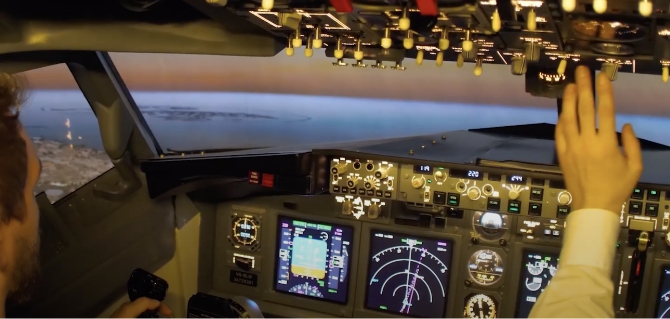
Standard Computer Hardware and Software Configured to Produce Useful Flight Simulator in Study 6 pages. [PDF 40K]

U.S. researchers developed a research simulator using personal computers and two commercially available flight-simulation software packages. A study found that such economical and readily
assembled systems offer promise for use in pilot performance research and in training.

May–June 1996

Flight Crews Cautioned About Unsupervised Melatonin Use 4 pages. [PDF 34K]

Despite claims about its effectiveness in inducing sleep and producing other health benefits, it is still not known whether long-term melatonin use can result in side effects.

March–April 1996

Flight Crews and Cabin Crews Encouraged to Increase Awareness of In-flight Ionizing Radiation 4 pages. [PDF 30K]

Crew members who regularly fly at high cruise altitudes receive higher levels of ionizing radiation than the general population. The increased risk appears to be slight, but greater attention is being focused on monitoring of, and education about, ionizing radiation.

January–February 1996

Study Suggests Longer Life Expectancy for Retired Pilots than for their General Population Counterparts 6 pages. [PDF 41K]

It has been said that stresses peculiar to the pilot’s profession tend to cause premature death after retirement, and evidence purports to show that pilots often die shortly after their careers end. This study of one airline’s pilots, retiring at age 60 during a 25-year-period, provides contrary evidence.

get full access to this article by joining today

FSF Membership includes full access to the AeroSafety World, a daily publication providing our members the latest news and information in aviation safety.

Join Today

Popular Categories

Explore Articles

Aviation Mechanics Bulletin 2005–2006

These documents are in Adobe® Portable Document Format (PDF) and require a copy of Adobe Reader® to view them. If...

Human Factors & Aviation Medicine 2005 – 2006

These documents are in Adobe® Portable Document Format (PDF) and require a copy of Adobe Reader® to view them. If...

Helicopter Safety 2004

These documents are in Adobe® Portable Document Format (PDF) and require a copy of Adobe Reader® to view them. If...

ICAO Secretary General to Deliver Keynote at FSF Networking and Awards Dinner

ALEXANDRIA, Virginia — International Civil Aviation Organization (ICAO) Secretary General Juan Carlos Salazar will deliver ...

Human Factors & Aviation Medicine 2005 – 2006

These documents are in Adobe® Portable Document Format (PDF) and require a copy of Adobe Reader® to view them. If you do no...

Foundation Recognizing EUROCONTROL and Embry-Riddle With Awards

The awards will be presented June 24 at the annual Networking and Awards Dinner in Washington....

Google Ads

Related posts

View Archives

Human Factors & Aviation Medicine 2005 – 2006

These documents are in Adobe® Portable Document Format (PDF) and require a copy of Adobe Reader® to view them. If you do no...

Aviation Mechanics Bulletin 2005–2006

These documents are in Adobe® Portable Document Format (PDF) and require a copy of Adobe Reader® to view them. If you do no...

Helicopter Safety 2005–2006

These documents are in Adobe® Portable Document Format (PDF) and require a copy of Adobe Reader® to view them. If you do no...

Cabin Crew Safety 2005–2006

These documents are in Adobe® Portable Document Format (PDF) and require a copy of Adobe Reader® to view them. If you do no...

Flight Safety Digest 2005–2006

These publications are in Acrobat® Portable Document Format (PDF) and require a copy of Adobe Reader®. If you do not have a...

Help Us Make The Skies Safer

“For nearly 80 years, the Foundation has been a leading force in aviation safety around the world. Our work is made possible by our members. Join today to help ensure that the Foundation remains the authoritative voice on all matters pertaining to aviation safety.”

– Hassan Shahidi | President and CEO