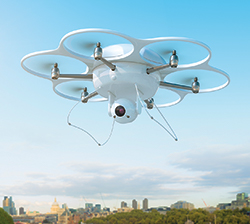
Even though Congress has mandated a deadline in 2015 for integrating unmanned aircraft systems (UAS) into U.S. airspace, that deadline will probably not be met. However, increasing attention from many sources outside the U.S. Federal Aviation Administration (FAA) is focused on how safety concerns will be addressed.
Typically, the safety conversation boils down to how to avoid collisions between conventionally piloted aircraft and UAS, and UAS crash landings. That’s a fair departure point for thoughtful discourse, but as someone who had responsibility for safety at the U.S. National Transportation Safety Board and the FAA, I believe we need to consider the broader picture. UAS have tremendous life-saving potential when lost people need to be found; when wildfires develop; when tornadoes hit; and when power lines, oil rigs and bridges need close inspection. Almost every day, there is news of a new idea about how to gain valuable social benefits from this technology without having to p…