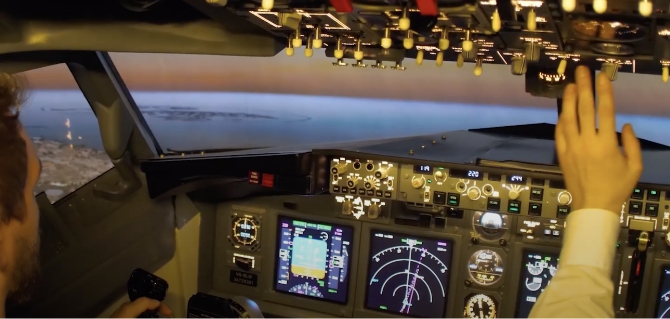

WIth forecasts of an increase in sunspots and solar flares in the coming months, pilots are being cautioned about a corresponding increase in the sun’s contribution to cosmic radiation, which some aeromedical specialists believe may be associated with skin cancers and breast cancer in crewmembers whose flights typically are conducted at higher altitudes.
The International Federation of Air Line Pilots’ Associations (IFALPA) approved a policy in late 2012 calling for some aircraft that operate above 26,000 ft in polar and sub-polar regions to be equipped with warning devices to inform pilots of sudden increases in the rate of radiation exposure.
The policy also said that flight personnel who receive an effective dose of more than 1 millisievert (mSv) of radiation per year (the equivalent of 100 tooth X-rays; Table 1, p. 34) “should be recognized as occupationally exposed to ionizing radiation. Those who are liable to receive an effective dose greater than 6 mSv per year should b…