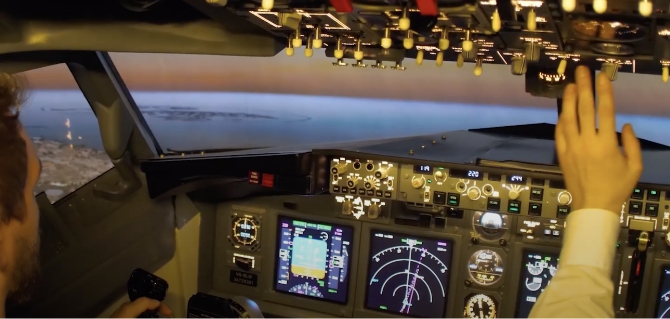

Government and industry specialists framed pressures to reinvent the training of airline pilots as a seismic shift compared with recent history as they addressed the World Aviation Training Conference and Tradeshow (WATS 2011). Atypical public concerns about the role of human performance in air transport safety mean that substantial changes have to occur almost simultaneously under time constraints, most agreed at the April 19–21 event in Orlando, Florida, U.S. The change process itself also demands concerted risk mitigation.
The effects of predicted airline industry growth on accident frequency and human resources gaps were dominant themes. “Boeing and Airbus agree that in the next two decades, we will probably [deliver] 30,000 more airplanes, virtually doubling [the fleet] we have today,” said Len Weber, chief operating officer, Training and Flight Services, Boeing Commercial Aviation Services. “For those new planes, we will need 466,000 new pilots or … about 23,000 new pi…