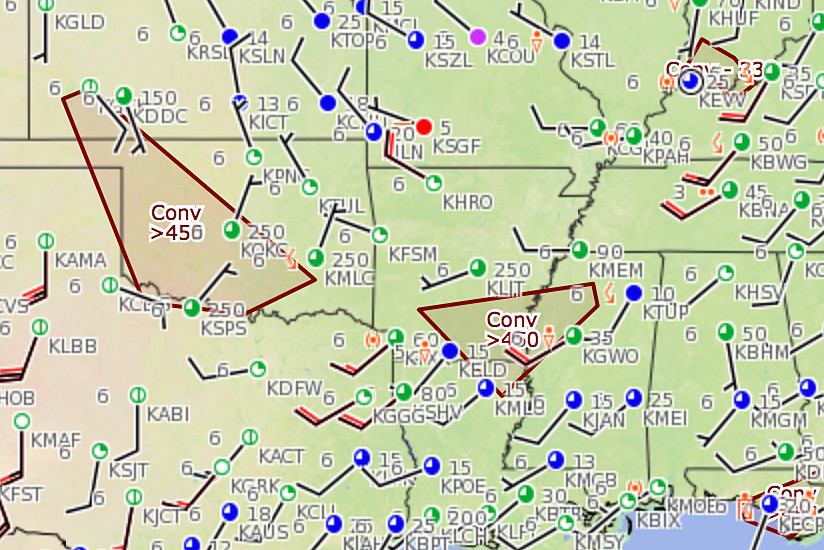
Because of the severe flight hazards associated with convection (turbulence, wind shear, hail and lightning), meteorologists are constantly trying to improve convective forecasts. In spring 2017, two new tools were added to the weather safety arsenal: the traffic flow management (TFM) convective forecast (TCF) and the graphical forecasts for aviation (GFA).
TCF, launched by the National Weather Service (NWS), is available from March 1 until the end of the convective season on Oct. 31; it replaced the collaborative convective forecast product (CCFP) but has a similar format.
The TCF is intended to provide “timely delivery of high-confidence, high-relevance forecasts of convection across the continental United States and adjacent coastal waters,” according to information available on the Aviation Weather Center (AWC) at aviationweather.gov. The forecasts will allow air traffic management decision makers to “proactively and collaboratively initiate, amend or terminate planned …