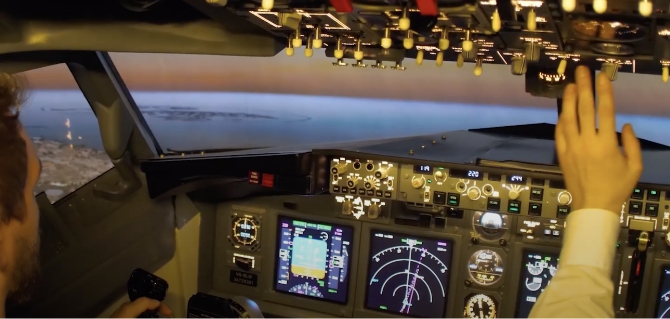
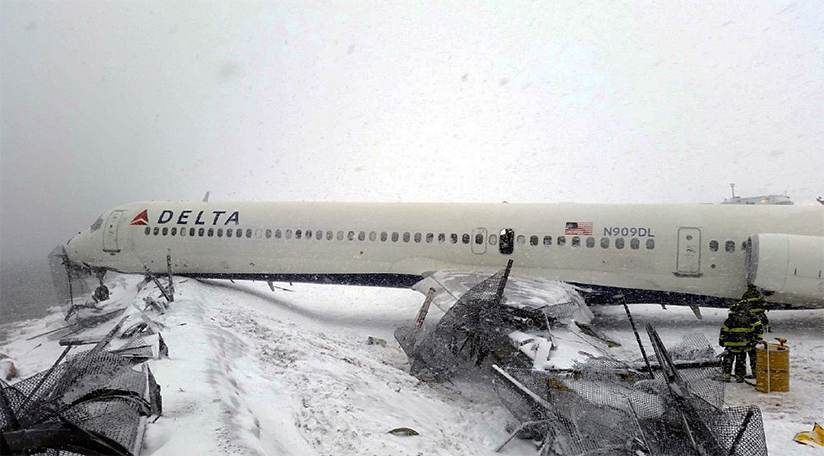
Concerned about the slippery and relatively short runway at New York’s LaGuardia Airport, the flight crew of the Boeing MD-88 decided early that they would attempt to land only if they received a report of good braking action.
Due to lengthy snow-removal operations, the MD-88 was close to the airport before the crew received the green light they were looking for: The pilots of two preceding airplanes had reported good braking action after landing.
The crew proceeded, expecting to see at least some clear portions of runway on approach. But when the MD-88 broke out of the clouds, they saw only white: The runway was still totally covered with snow.
The captain applied reverse thrust shortly after touchdown — but far more than was recommended for a slippery runway, according to the U.S. National Transportation Safety Board (NTSB).
This caused a phenomenon called rudder blanking, in which the smooth airflow over the rudder was disrupted, rendering this critical flight…