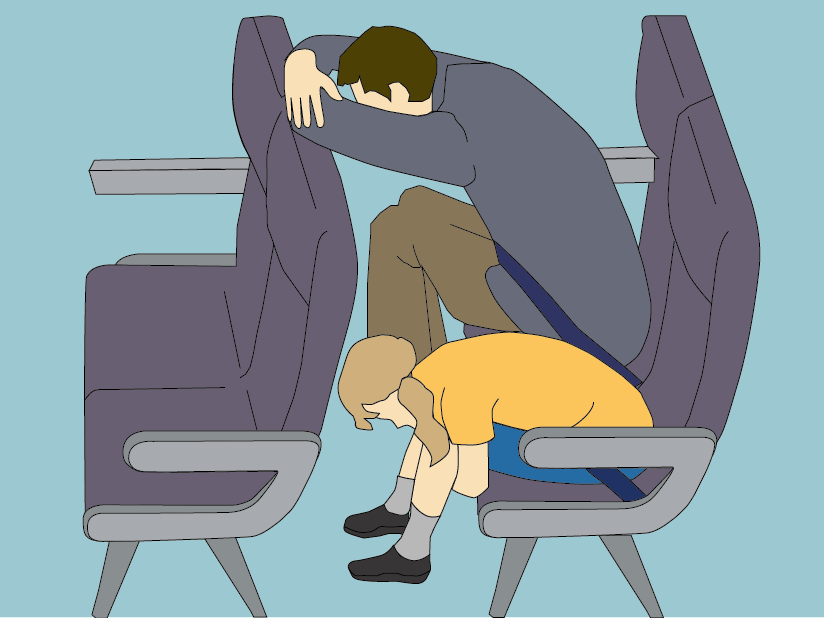
The most frequently used brace position — long recommended for airline passengers in case of an imminent crash — provides protection only against some types of injuries and only in some circumstances, according to a report from the U.S. Federal Aviation Administration’s (FAA’s) Civil Aerospace Medical Institute (CAMI).
The recommended brace position, which has been described for decades in passenger briefings and on seat-back information cards, calls for passengers to bend forward in their seats, either wrapping their arms under their legs or placing their folded arms against the top of the seatback in front of them and resting their foreheads against their arms. Other variations of this position exist, and, in general, the idea is to have passengers position themselves against “whatever they are most likely to be thrown against” during the crash sequence
Over the years, seat designs have evolved as part of an ongoing effort to develop more crashworthy seats. Variatio…