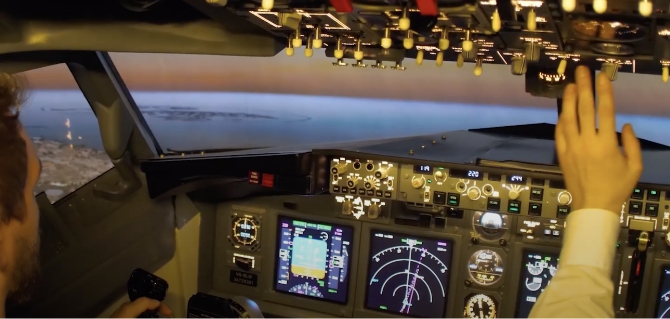
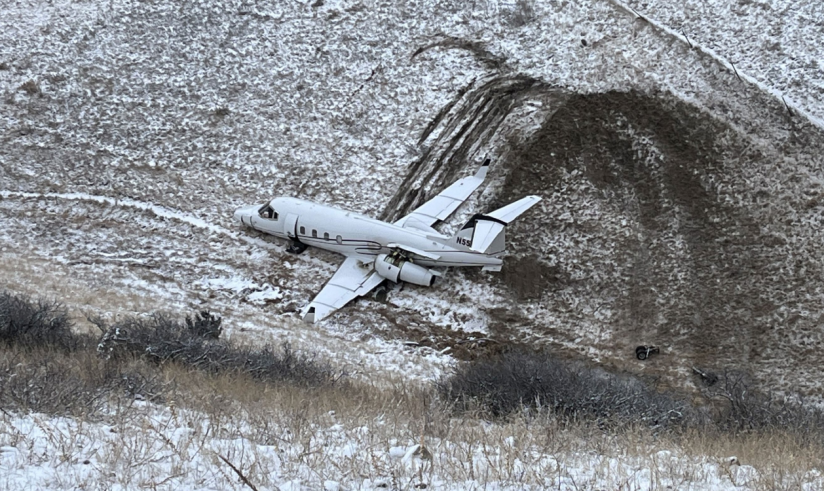
The flight crew recalled that the automated surface observing system (ASOS) at the uncontrolled airport indicated that they would be landing the Learjet 55 with a “light quartering tailwind.” Then, someone radioed on the common traffic advisory frequency (CTAF) that the runway was covered with 1/4 in (0.6 cm) of dry snow. However, the U.S. National Transportation Safety Board (NTSB) determined that there actually was about an inch (2.5 cm) of snow on the unplowed runway, and that the tail wind component was nearly 8 kt.
“During the landing roll, [the flight crew] applied brakes, and extended spoilers and thrust reversers,” the NTSB report said. “Initially, the airplane slowed; however, about halfway down the runway … the airplane’s rate of deceleration decreased” despite the continuous functioning of the anti-skid braking system.
The pilot cycled the thrust reversers, but still sensed no deceleration. He began to configure the airplane for a go-around, …